 burghlemarsh.info
Education in Burgh le Marsh: Schools and College
published 19th December 2022 Education has played an important role in Burgh le Marsh, judging by the variety of schools that were established. There was the Dames school in the Market Place, a Wesleyan school in Orby Road, and St. Paul’s College. Children from outlying areas received instruction from the college students at the Middlemarsh Mission Chapel, which is[...]
History of Burgh House
published 2nd November 2022Records of Burgh House date back to 1797 when the executors of John Chapman, Surgeon, deceased, who had originally had the house built, sold the property to William Cooke of Burgh and upon his death on the 6th August 1831 the house passed down to his son also a William Cooke. William Cooke Jnr died[...]Historic Aerial Views of Burgh, Skegness & Ingoldmells
published 2nd November 2022Kindly supplied by Mrs Ann Crawshaw Burgh le Marsh.Monksthorpe Chapel History: Burgh and Monksthorpe
published 2nd November 2022Monksthorpe Chapel 1910 – contributed by Nancy Sorfleet The present chapel at Monksthorpe was built in 1701. It stands in two acres of grounds, entirely surrounded by a good variety of trees. It was built like a barn with a thatched roof, so that it would not easily be recognised as a chapel. The thatched[...]Jabez Good: Barber, Historian, Artist, Sign Writer and Taxidermist
published 2nd November 2022Jabez Good Jabez Good was an eccentric character who earned respect from the people of Burgh. He achieved many things in his 81 years before his death in 1911. Jabez, the local barber wrote ‘A Lincolnshire Glossary’, in this can be found the meaning of dialect, a form of language spoken by local people. Apart[...]Burgh le Marsh Coat of Arms
published 1st November 2022Willoughby Burgh Coat of Arms The coat of arms of the Earl of Ancaster used by Burgh le Marsh incorporates the names of Willoughby, Drummond and Heathcote. Lord Willoughby-de-Eresby was lord of the Manor of Barnack, a property of Captain Hardwick, land agent to the Duke of Ancaster. Lord Willoughby bequeathed his estates to the[...]The History of Burgh Hall
published 1st November 2022Sir George William Crauford, 3rd Baronet of Crauford, (also spelt as Craufurd) & vicar of Burgh le Marsh from 1838 to 1846 had Burgh Hall built in 1840. “A commodious mansion with pleasant grounds” at a cost of £3000.00. The Jane Palmer School which was founded in 1726 had a school house added in 1864[...]Burgh le Marsh Railway Station – Past & Present
published 1st November 2022Railway Station The station at Burgh, situated in the tiny parish of Gunby, was to be built under the direction of the East Lincolnshire Railway, which was finally given Royal Assent on 26th June 1846. Today, this date in itself may seem unremarkable, yet it happens to be one of the most momentous in the[...]Bishop Tozer 1829-1899
published 1st November 2022Bishop Tozer Bishop Tozer was born in Teignmouth, educated at St John’s College, Oxford and Wells Theological College. Following his ordination to the curacy of St Mary Magdalene Munster Square in 1854 he then moved to Burgh le Marsh as vicar of Burgh & Winthorpe. Burgh le Marsh was at that time renowned in the[...]Gunby Hall
published 8th July 2019Gunby Hall was built by Sir Henry Massingberd in 1700 according to a dated keystone on the west doorway set in 8 acres of parkland. The courtyard leads to beautiful well kept gardens in which there is a blue gazebo. Alfred Lord Tennyson described it as ‘an English home… all things in order stored, a[...]

History Articles
 Education has played an important role in Burgh le Marsh, judging by the variety of schools that were established. There was the Dames school in the Market Place, a Wesleyan school in Orby Road, and St. Paul’s College. Children from outlying areas received instruction from the college students at the Middlemarsh Mission Chapel, which is[...]
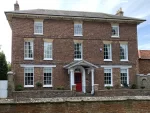 Records of Burgh House date back to 1797 when the executors of John Chapman, Surgeon, deceased, who had originally had the house built, sold the property to William Cooke of Burgh and upon his death on the 6th August 1831 the house passed down to his son also a William Cooke. William Cooke Jnr died[...]
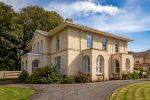 Sir George William Crauford, 3rd Baronet of Crauford, (also spelt as Craufurd) & vicar of Burgh le Marsh from 1838 to 1846 had Burgh Hall built in 1840. “A commodious mansion with pleasant grounds” at a cost of £3000.00. The Jane Palmer School which was founded in 1726 had a school house added in 1864[...]
 Gunby Hall was built by Sir Henry Massingberd in 1700 according to a dated keystone on the west doorway set in 8 acres of parkland. The courtyard leads to beautiful well kept gardens in which there is a blue gazebo. Alfred Lord Tennyson described it as ‘an English home… all things in order stored, a[...]